Description
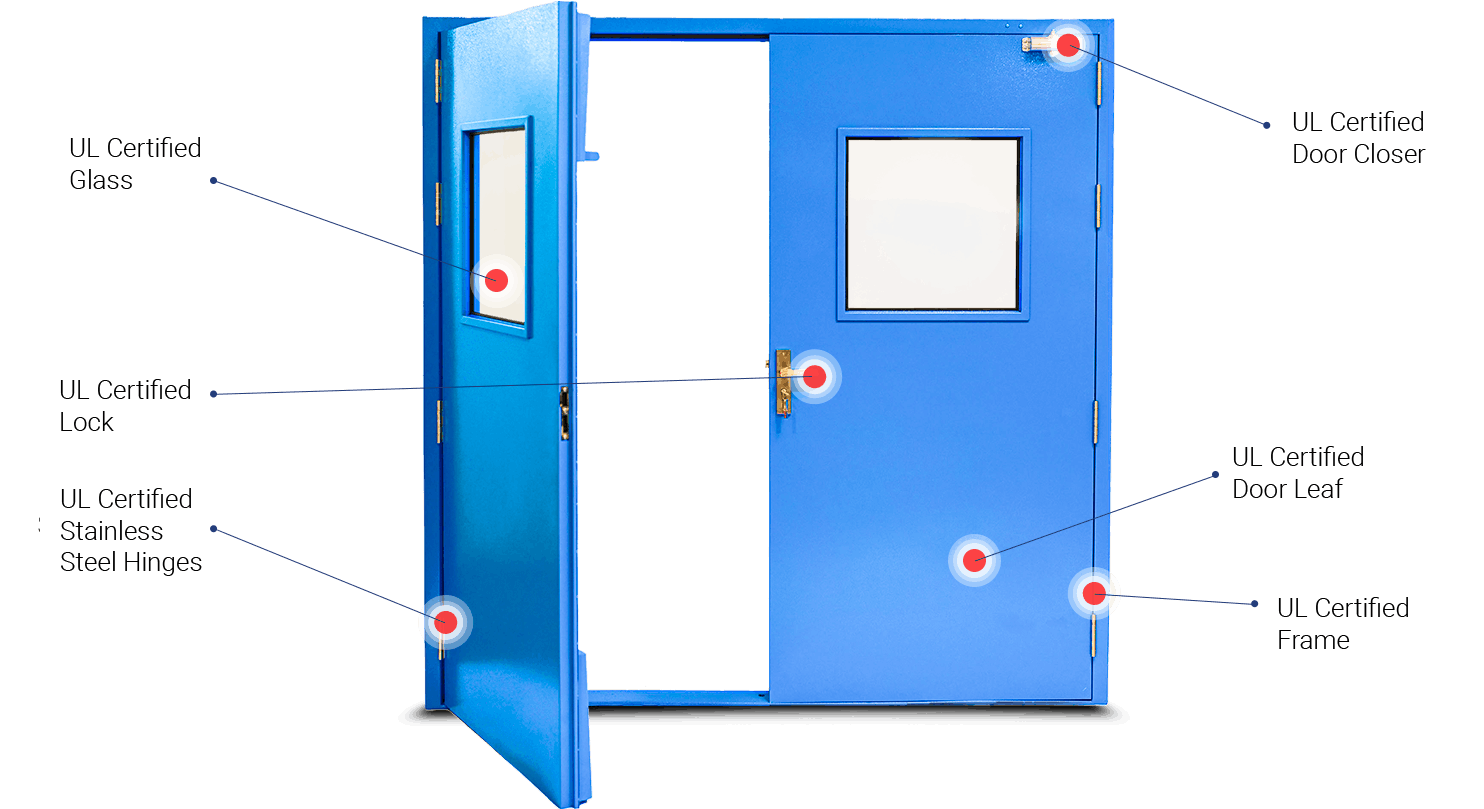
Building-integrated fire and smoke containment systems — automatic fire curtains for open/atrium spaces, and fire & smoke dampers for ductwork/HVAC systems — complementing MEK's fire door range to give full-building compartmentation.
Available options
- Automatic Fire Curtains — standard rolling type, plus Elevator, Horizontal, Accordion, Egress and UL 10B Hose Stream variants
- Fire and Smoke Dampers — automatic fire dampers (ultra-low-leakage, single-acting, double-acting), smoke dampers, and combination fire/smoke dampers
Specifications
- Fire curtains: tested in single and multiple roller orientations, oversize certification available
- Dampers: duct sizes from 4"x4" up to 48"x48"; fire ratings of 1, 1.5 and 2 hours; steel construction
Standards and certifications: Fire curtains: BS 476 Pt6/Pt7 Class 0, BS 5234-2:1992, BS 8524-1:2013, BS EN 1634-1:2014, BS EN 1634-3:2014, UL 10D & UL 1784, BS EN 13501-1:2007+A1:2009 — third-party accredited by Certifire. Dampers: tested and certified by Underwriters Laboratories (UL) and accredited bodies per local building codes.
Applications
- Fire curtains: durable fibreglass fabric, concealed head-box installation above the ceiling (invisible until activated), gravity fail-safe closing triggered by fire alarm, resists up to 3 hours of continuous fire and limits spread of flame, heat radiation and toxic smoke
- Dampers: heat-activated (fusible link), smoke-activated, or fire-alarm-linked electrical activation; self-closing and fail-safe (remain closed if power is lost); airtight seal; flange, sleeve or curb mounting options; regular inspection access built in
- Atriums, malls, open-plan and multi-storey commercial buildings (fire curtains)
- HVAC ductwork, fire walls and floor penetrations across commercial/industrial buildings (dampers)
Benefits
- Contains fire spread through large open architectural spaces where conventional doors aren't practical
- Maintains ventilation-system integrity during a fire event
- Fail-safe design ensures protection continues even during a power loss